How to Choose a Pearl
Updated 23rd November 2026
Choosing pearl jewellery comes down to two things: the pearl and the design it sits in. Start with what you want from the pearl, whether that is shine, value, size or a particular colour, and the type of pearl follows from it. Then choose a design, a piece and a metal to suit the person who will wear it.
What are you looking for in a pearl?
The brightest shine
Choose Akoya pearls. They have the sharpest lustre of any pearl we sell, and a good one reflects light almost like a mirror. Most are round and white, which is why they are the classic pearl for a strand or a pair of studs.
The most pearl for your money
Choose freshwater pearls. They are real cultured pearls at the lowest price for their size, with the widest choice of shapes, from round to baroque. They are hard-wearing and easy to wear every day.
A larger saltwater pearl
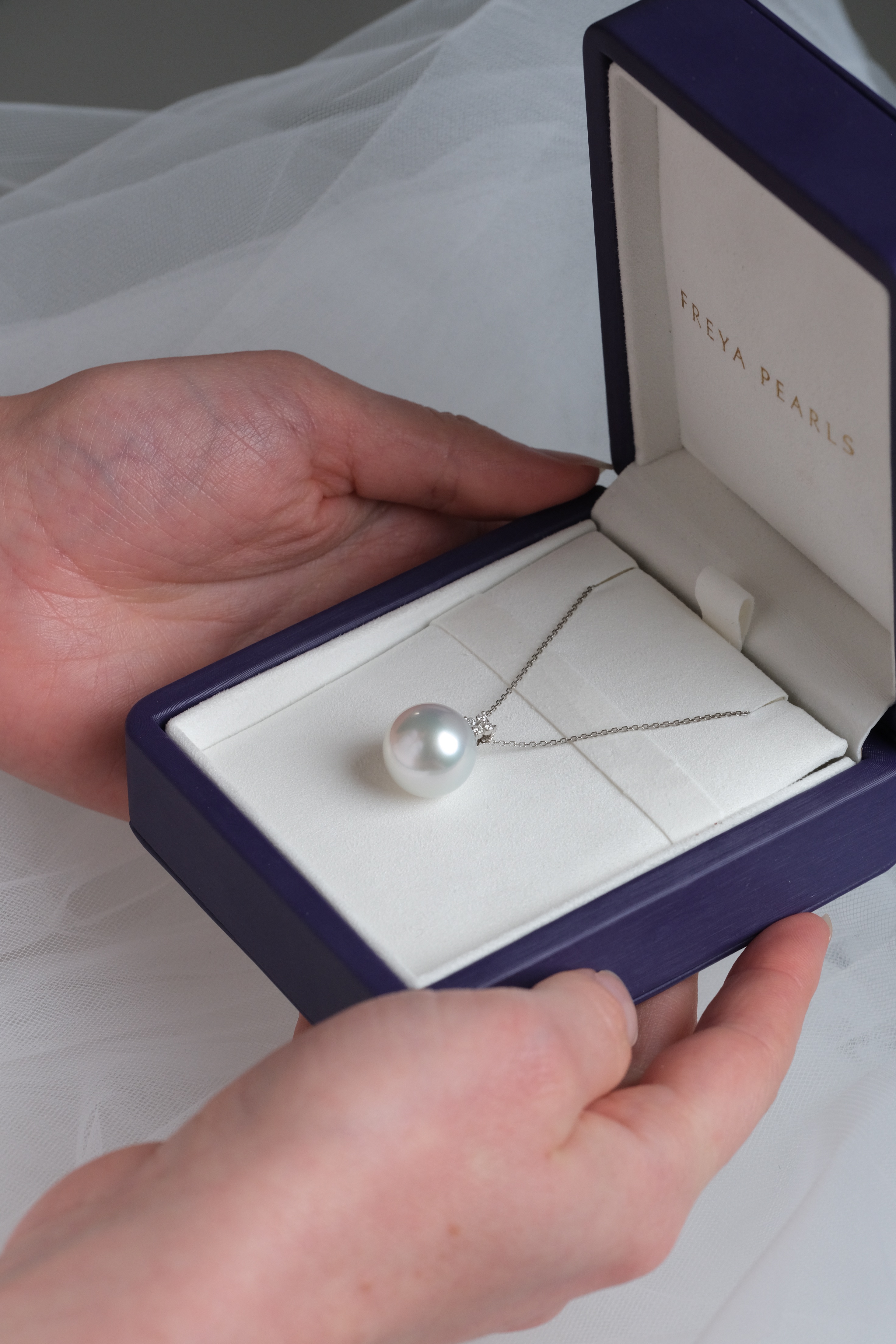
Choose Australian South Sea pearls. They are the largest cultured pearls, with thick nacre and a soft, satin lustre, and they make up the largest part of our range. A single Australian South Sea pearl on a pendant or in a pair of earrings is a piece that will be worn for decades.
A particular colour
White. Akoya pearls for a bright white, often with a pink overtone, or Australian South Sea pearls for a larger white or silver pearl.
Soft pastels. Freshwater pearls grow naturally in cream, pink, peach and lavender.
Dark. Tahitian pearls are naturally grey, green, blue or purple.
Gold. Golden South Sea pearls are the only naturally gold pearls.
Once you know the type, compare pearls by lustre first, then surface, shape and size. Our product pages grade every pearl on these points, and our Grading Guidelines explain what each grade means.
Choose a design
The design decides how a pearl is worn and what it says about the person wearing it. Our range runs from a single pearl on a fine chain to pieces built around a theme.
Designs by theme
Flowers. Petals and leaves around a pearl, as in First Bloom, Lotus and Magnolia Light.
The sea. Waves, coral and water, as in Coral Reverie, Ocean Poise and Siren's Song.
The night sky. Stars and planets with a pearl at the centre, as in Eternal Starlight, Nova, Falling Star and Pearl of the Zodiac.
Wings. Butterflies and wings, as in First Wings and Fluttering Light.
Matching sets
Many of our designs come as a pendant, earrings and a ring in the same design, and some add a bracelet. Coral Reverie, Eternal Starlight, First Bloom and Lotus are a few of them. A set makes a gift that can grow: start with the pendant and add the earrings for the next birthday.
Everyday pieces
For something simple to wear every day, our Everyday Collection brings together single pearls on clean settings that go with everything.
Classic pieces
A pearl strand, a pair of studs or a single pearl on a chain never date. If you are unsure of someone's taste, a classic piece is the safest choice.
Choose the piece
Pendant. The easiest piece to give and to wear. It needs no sizing and suits every neckline.
Earrings. Studs sit close to the ear for every day, while drops move and catch the light.
Bracelet or ring. Both need a size, so check it first with our Size Guide.
Strand. The classic pearl necklace. Every pearl must match, so a strand costs more than a single pearl of the same type and size.
Brooch. An affordable way to wear pearls on a coat, a jacket or a scarf.
Set a budget
Under $300, choose from freshwater and smaller Akoya pearls in sterling silver. Between $300 and $1,000 you have the widest choice, including Australian South Sea pendants and earrings in silver, Akoya and freshwater strands and the first pieces in 9k gold. From $1,000 to $3,000 the pearls get larger and the metal moves to 18k solid gold. Above $3,000 are Australian South Sea strands, large matched pairs and pieces set with diamonds.
Choose the metal
Sterling silver is the most affordable and suits white pearls. Gold-filled metal gives the look of gold for less. Solid gold costs the most and lasts the longest, with 9k as the most affordable karat and 18k as the richest in colour. Our guide to jewellery materials explains each.
FAQ
How do I choose a pearl?
Decide what matters most to you. For the brightest shine, choose Akoya. For the most pearl for your money, choose freshwater. For a large saltwater pearl, choose Australian South Sea. For a dark pearl, choose Tahitian, and for gold, choose Golden South Sea. Then compare pearls of that type by lustre, surface, shape and size.
Which pearl has the most shine?
Akoya pearls have the sharpest, most mirror-like lustre. South Sea pearls have a softer, satin glow, and freshwater pearls vary from soft to bright.
Which pearl type is the best value?
Freshwater pearls give you the most pearl for your money. Akoya pearls cost more for their size but have a sharper lustre. Australian South Sea pearls cost the most because they are the largest cultured pearls and take the longest to grow.
What pearl jewellery makes the best gift?
A pendant or a pair of earrings, because they do not need a size. A white pearl is the safest choice of colour. A piece from a matching set is also a good gift, since the rest of the set can follow on later occasions.
Do your designs come in matching sets?
Many do. Designs such as Coral Reverie, Eternal Starlight, First Bloom and Lotus come as a pendant, earrings and a ring, and some add a bracelet.
Is a bigger pearl always better?
Not always. A smaller pearl with a bright lustre and a clean surface will look better than a large pearl that is dull or marked. If your budget is fixed, choose the best lustre you can afford before choosing a larger size.