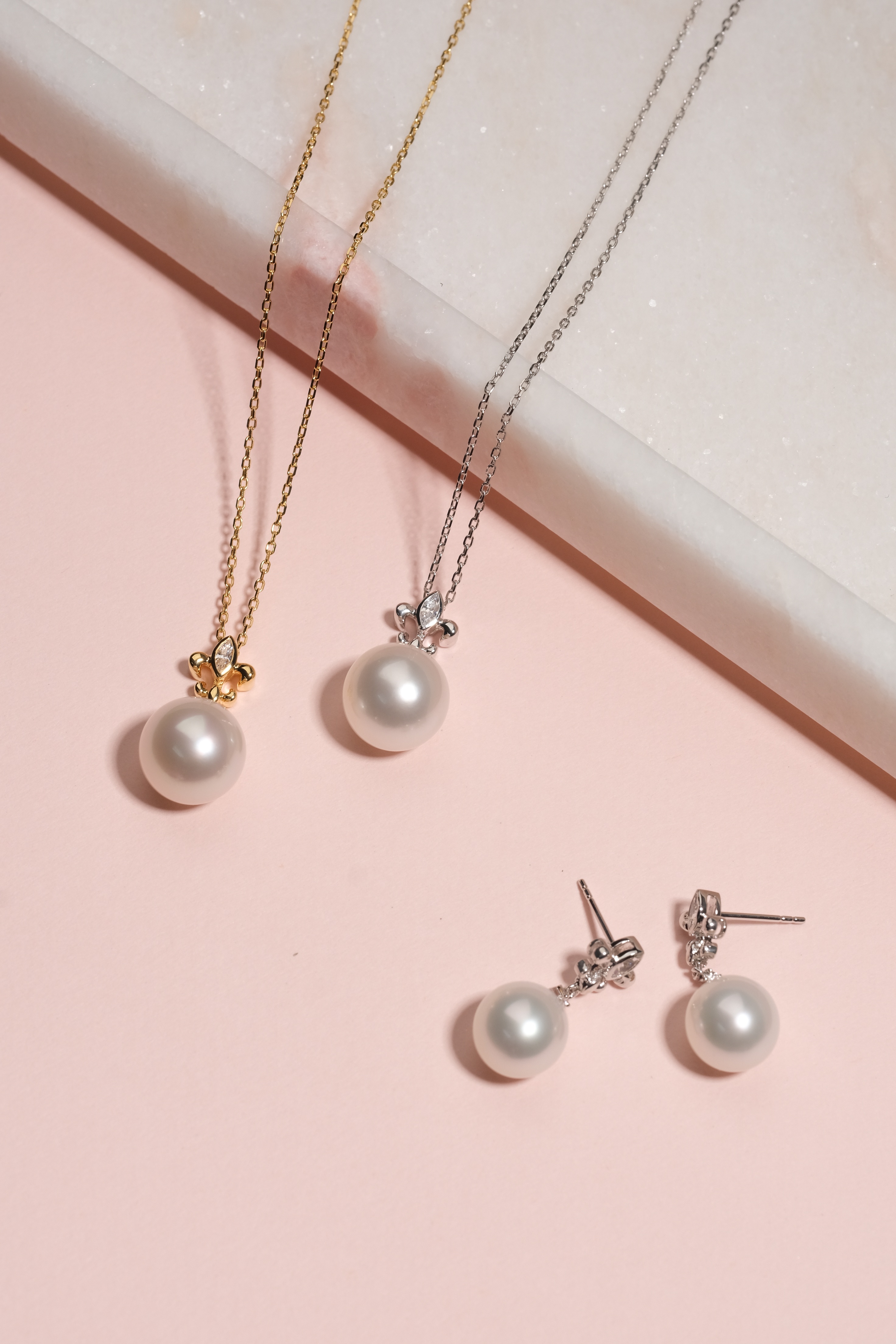
Jewellery Materials
Updated 22nd November 2026
Every piece we make names its metal in the description. This page explains what each one is, how it wears, who it suits and how to look after it.
Sterling Silver
Sterling silver is 92.5% pure silver, alloyed with a small amount of other metal for strength. It has a bright, cool white colour that suits white and silver pearls. Silver tarnishes over time as it reacts with the air, which shows as a grey or yellow film. Wearing it often slows tarnish, and a silver polishing cloth removes it. Store it in a closed pouch when you are not wearing it.
14k Gold-filled
Gold-filled metal has a thick layer of 14k gold bonded to a base metal core with heat and pressure. The gold layer makes up a substantial share of the metal's weight, many times thicker than plating, so gold-filled jewellery looks and wears like solid gold for years. It does not flake, it is safe to wear every day, and it costs far less than solid gold. Clean it with mild soapy water and a soft cloth.
18k Gold-plated
Gold-plated metal has a very thin coat of gold applied to a base metal by electroplating. It gives the colour of 18k gold at a low price. Because the layer is thin, plating wears away over time, faster on rings and bracelets that rub against surfaces. To keep it longer, take it off before washing, swimming or exercise, and keep it away from perfume.
Gold-filled or gold-plated?
This is the question we are asked most. Both have a gold surface over a base metal, and the difference is how much gold there is. Gold-filled carries a thick, bonded layer that lasts for years of daily wear. Gold plating is a thin coat that eventually wears through. If you want a piece to wear every day without thinking about it, choose gold-filled or solid gold. Choose gold-plated for occasional wear or a lower price.
Solid Gold
Solid gold is gold all the way through, alloyed with other metals for strength and colour. Its karat tells you how much of the metal is pure gold. Solid gold does not tarnish or wear through, and it is the best choice for pieces you intend to keep for a lifetime.
9k gold is 37.5% gold. It is the hardest and most affordable solid gold, with a paler colour, and it stands up well to everyday wear.
14k gold is 58.5% gold. It balances a rich colour with durability.
18k gold is 75% gold, with a deep, warm colour. It is the traditional choice for fine jewellery.
24k gold is 99.9% gold. It has the richest colour and is the softest, so it is used where a piece will not take hard knocks.
Clean solid gold with mild soapy water and a soft brush, then dry it with a soft cloth.
Lab-grown Diamond
A lab-grown diamond has the same chemical make-up, hardness and sparkle as a mined diamond. The difference is where it formed: in a laboratory rather than deep underground. Our descriptions give each diamond's weight in carats. Diamonds are durable and can be cleaned along with the gold they are set in, but the pearls beside them still need gentle care.
FAQ
Will gold-filled jewellery tarnish?
With normal care, no. The thick gold layer protects the core, and gold itself does not tarnish.
Can I wear sterling silver every day?
Yes. Regular wear actually slows tarnish. Polish it with a silver cloth when it starts to dull.
Is 9k gold real gold?
Yes. 9k gold is solid gold that is 37.5% pure, which makes it harder wearing than higher karats.